Where Should Downspouts Drain? Extensions, Splash Blocks, and Grading
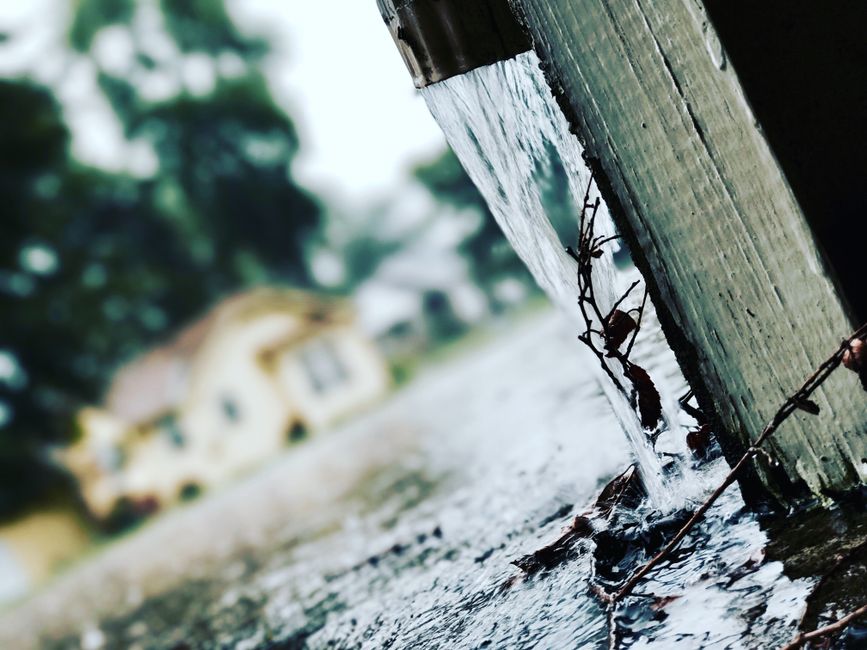
The Downspout's Job Doesn't End at the Bottom
A downspout's only real purpose is to get water off the roof and away from the house, but the "away from the house" part is where a lot of otherwise well-installed systems fall short. A downspout that dumps water directly at the base of the foundation has done half the job — collected the water — and skipped the more important half, which is moving it somewhere that won't cause problems. Where that water actually ends up depends on a combination of extensions, splash blocks, and the slope of the ground immediately around the foundation.
Downspout Extensions
An extension is simply a length of pipe, flexible tubing, or rigid downspout material attached to the bottom of a downspout to carry water further from the foundation than the downspout alone would reach. Without one, water exits right at the base of the wall, which is often exactly where a home's foundation is most vulnerable to saturation over time. A well-placed extension routes that water several feet out into the yard, ideally to a spot where the ground continues to slope away rather than back toward the house.
Rigid extensions hold their shape and direction but can become a tripping hazard or get damaged by a mower if left in place year-round; flexible or roll-out styles lie flatter against the lawn and can be tucked out of the way, though they're easier to crush or kink over time. Underground extensions solve both of those problems by routing the discharge below grade to a point further from the house, at the cost of more upfront work to install.
Splash Blocks
A splash block is a simple, low-tech solution: a shaped concrete, plastic, or stone piece placed beneath the downspout outlet to break up the force of falling water and direct it a short distance away from the foundation before it soaks into the ground. Splash blocks work reasonably well for homes with good existing grading and where a downspout only needs to redirect water a few feet, but they have limits. Heavy rain can overwhelm a small splash block, causing water to pool around it instead of flowing away as intended, and a block that has shifted out of position over time — from freeze-thaw movement, lawn equipment, or simple settling — stops doing its job without an obvious visual sign that anything has changed.
Grading: The Piece That Ties Everything Together
Extensions and splash blocks both depend on one underlying condition: the ground has to actually slope away from the foundation for gravity to carry water where it's supposed to go. If the grade around a home is flat, or worse, slopes back toward the house, even a well-placed extension or splash block will eventually lose the battle, since water finds the lowest point regardless of where a pipe was aimed. This is especially common around older homes where decades of soil settling, landscaping changes, or added mulch beds have gradually flattened or reversed the slope that was originally built in.
Correcting grading typically means adding and compacting soil in a gentle slope away from the foundation, generally dropping the ground level over the first several feet out from the wall. This isn't a downspout fix specifically, but it's the piece of the drainage picture that determines whether everything upstream of it — the gutter, the downspout, the extension — actually accomplishes anything once the water hits the ground.
Reading the Signs of a Drainage Problem
A few patterns point to a downspout discharge point that isn't working: visible erosion or a small gully carved into the lawn directly below an extension outlet, standing water near the foundation after a rain that takes unusually long to drain, or staining and efflorescence on a foundation wall near where a downspout empties. Any of these suggest the water is either being released too close to the house or isn't finding a clear path away from it once it lands.
Putting It Together
Extensions, splash blocks, and grading aren't competing solutions — they work in sequence. The downspout collects the water, an extension or splash block gets it clear of the immediate foundation area, and proper grading carries it the rest of the way. A gap in any one of the three tends to show up as a drainage problem somewhere in the yard or at the foundation, even when the downspouts themselves are correctly sized and in good condition.
Homes throughout the Dubuque area and the surrounding tri-state region deal with heavy spring runoff and periodic downpours that put this whole chain to the test, which is why the discharge end of a downspout system deserves as much attention as the gutter and downspout above it.
Requesting a Quote
If water is landing too close to your foundation, or an existing extension and splash block don't seem to be doing the job, call 908-493-5028 or fill out the short form on this site to request a quote and have your drainage setup looked at.