Underground Downspout Drainage: How It Works and When It Makes Sense
Taking Drainage Below the Surface
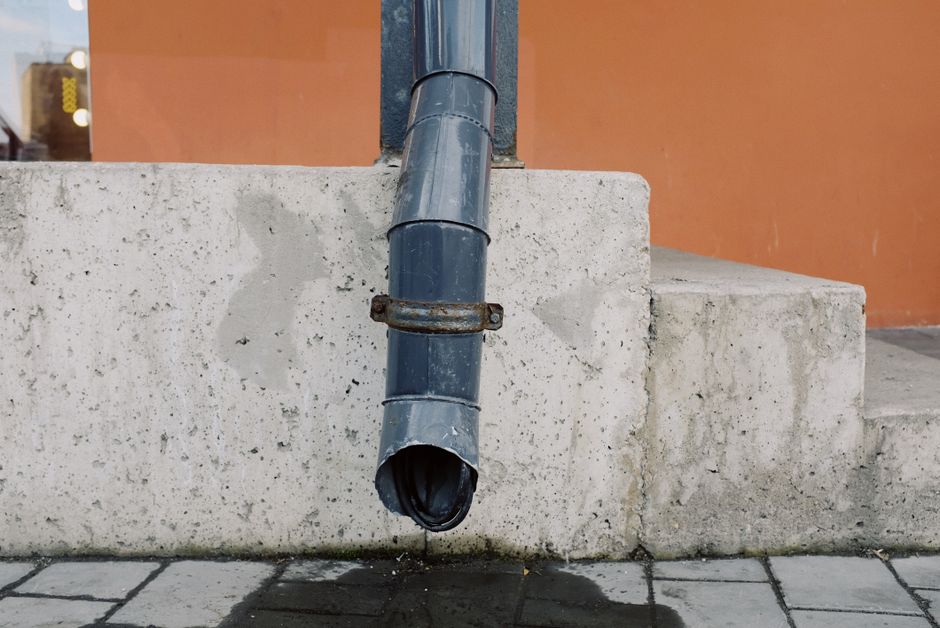
Most downspouts empty at or near ground level, using a short extension, a splash block, or nothing at all beyond the elbow at the bottom of the pipe. Underground downspout drainage takes a different approach: instead of releasing water a few feet from the house and relying on surface grading to carry it the rest of the way, the downspout connects to a buried pipe that carries water further from the foundation — sometimes to a spot at the edge of the property, a dry well, or a storm drain connection where one exists — before it ever reaches open ground near the house.
How the System Works
At its simplest, an underground downspout system is a length of solid or perforated pipe connected to the bottom of the downspout, buried a short distance below the surface, and sloped so gravity carries water away from the foundation to a discharge point further out in the yard. Solid pipe simply transports water from one end to the other; perforated pipe, more commonly used in drain tile applications, allows some water to seep into the surrounding soil along its length in addition to what reaches the far end.
The discharge point matters as much as the pipe itself. Water needs somewhere to go once it reaches the end of the line — an open pop-up emitter at a low point in the yard, a dry well designed to let water percolate into the soil gradually, or, on properties where one is already in place, a connection to an existing storm sewer line. Whatever the discharge method, the same underlying principle from surface drainage still applies underground: water has to keep moving toward a point that's actually lower than the foundation, or the buried pipe just becomes another place for water to sit.
When It Makes Sense
Underground drainage tends to make the most sense in situations where surface solutions run into a practical limit. A yard that's small, heavily landscaped, or bordered closely by a patio, walkway, or neighboring property line may not leave enough room for a surface extension to travel far enough from the foundation before it has to stop. A downspout on the side of the house facing a driveway, sidewalk, or property line often has nowhere for a visible extension to go without crossing a walkway or running across a neighbor's yard, which is exactly the kind of situation where routing the water underground avoids the conflict entirely.
It also tends to come up on properties where a persistent wet spot or drainage complaint keeps recurring in the same area no matter how the surface grading is adjusted, since burying the pipe removes the water from the surface picture in that specific problem zone rather than continuing to rely on grading changes that haven't solved it.
Trade-Offs to Weigh
Underground systems solve the visibility and yard-space problems that come with long surface extensions, but they introduce their own considerations. A buried pipe is harder to inspect than a surface extension — a clog or a crushed section isn't visible just by looking at the yard, and diagnosing a backup usually means digging up the affected section or running a camera through the pipe. Tree roots can also intrude into buried drainage pipe over time, particularly older clay or poorly-sealed joints, gradually restricting flow in a way that isn't obvious until the system backs up during a heavy rain.
Because the pipe is buried, it also needs proper slope established at installation, since a section that settles flat over time — or was never sloped correctly to begin with — will hold standing water underground rather than draining it, defeating the purpose of the system.
Freeze-thaw cycles add another layer to weigh. A buried pipe set too shallow can be affected by frost movement in the soil above it over a hard winter, which is part of why depth and backfill matter as much as slope when a system goes in. A pipe that's properly bedded and set below the point where seasonal frost regularly disturbs the ground tends to hold its slope and stay clear far longer than one installed as a quick, shallow fix.
Not a Universal Upgrade
Underground drainage isn't automatically better than a well-graded surface extension — it's a solution for specific site constraints rather than a default upgrade every home needs. A property with ample yard space and a grade that already slopes away cleanly from the foundation may get everything it needs from a simple surface extension and correct grading, without the added complexity of a buried pipe system. The decision comes down to the specific layout of the property and where the water actually needs to go once it leaves the downspout in the first place.
Planning for the Right Setup
Whether a property is a good candidate for underground drainage depends on yard layout, existing grade, and where nearby structures or property lines limit how far a surface extension can realistically run. That evaluation is part of what goes into planning new downspouts for a home, particularly on lots throughout the Dubuque area and the surrounding tri-state region where narrow side yards and closely spaced homes are common.
Requesting a Quote
If your yard doesn't leave room for a surface extension to go far enough, or a wet spot keeps coming back in the same place no matter what you've tried, call 908-493-5028 or fill out the short form on this site to request a quote and talk through whether underground drainage makes sense for your property.