How Old, Failing Gutters Contribute to Ice Dams and Winter Water Damage
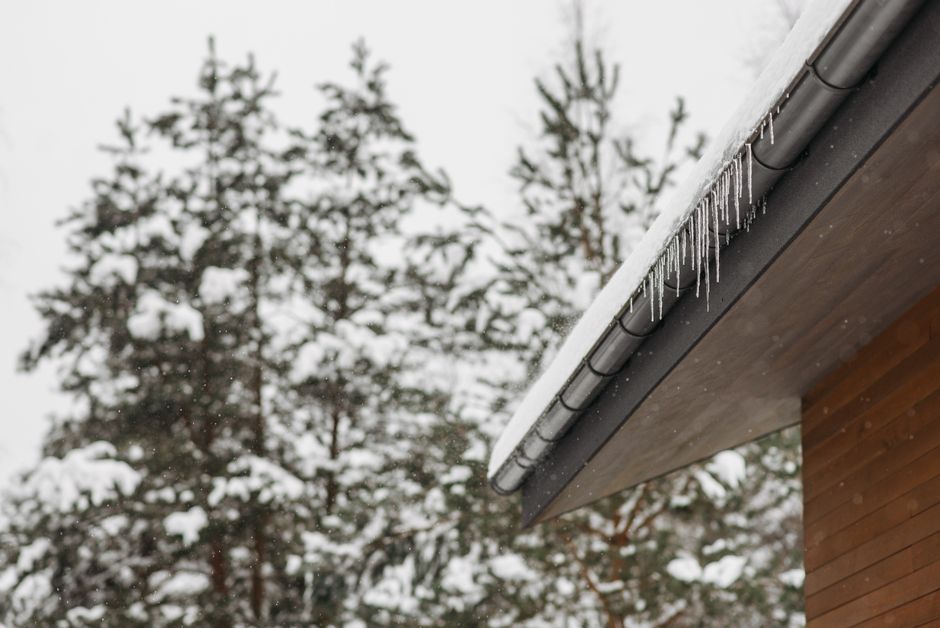
How Ice Dams Form
An ice dam forms when snow on an upper part of a roof melts — usually from heat escaping the attic below — runs down the roof surface, and then refreezes once it reaches the colder overhang near the edge, where there's no warm attic space underneath. Over time, that refreezing builds a ridge of ice along the eave. Once the ridge is established, additional meltwater backs up behind it instead of reaching the gutter and draining away normally, which is how water ends up working its way under shingles and into the roof edge itself.
This is primarily a roof and attic heat-loss issue rather than a gutter issue at its root. But the condition of the gutter system along that roof edge plays a real role in how much water backs up and where it goes once an ice dam has already started forming.
Where Aging Gutters Fit Into the Picture
A gutter system in good condition doesn't prevent an ice dam from forming — that's a function of roof temperature and snow cover, not the gutter itself. What a sound gutter system does is manage the water that reaches it more predictably. A gutter that's already sagging, disconnected, or clogged before winter sets in gives meltwater fewer places to go once an ice dam starts backing water up along the eave.
Ice itself also adds weight. A gutter that's already showing signs of wear — loose hangers, a section that sags slightly, fasteners that are already under strain — is more likely to be stressed further by the added weight of ice forming inside the trough and along the roof edge through a Iowa or Wisconsin winter. That added stress can turn a marginal gutter section into a failed one by the time the thaw comes.
Clogged or Undersized Systems and Winter Backup
A gutter that was already collecting leaves, debris, or standing water heading into winter has less capacity to handle meltwater once temperatures start swinging above and below freezing, which is a regular pattern in this region through late winter and early spring. Water that can't move through a clogged section has nowhere to go but over the edge or back up under the roofline, adding to the water already being pushed there by an ice dam above.
Fascia and Soffit Exposure
Water that backs up behind an ice dam and isn't carried away by the gutter system often ends up sitting against the fascia board or working its way into the soffit area for extended periods during a thaw. Repeated exposure like that, winter after winter, is part of why fascia boards near roof edges in this climate sometimes show wear even when the gutter itself looks intact. A gutter system that's already compromised — sagging, separated from the fascia, or leaking — offers even less protection to the wood behind it during this kind of prolonged water exposure.
Why Gutter Condition Matters Going Into Winter
None of this means a new or well-maintained gutter system prevents ice dams from forming — ice dams are driven by heat escaping through the roof, not by the gutters below it. What gutter condition affects is how much additional water damage happens around the roof edge once an ice dam is already present. A system that's clear, properly hung, and structurally sound going into winter manages the meltwater that does reach it more effectively than a system that's already clogged, sagging, or pulling away from the fascia before the first freeze.
The Freeze-Thaw Pattern in This Region
The tri-state area's winters typically bring repeated cycles of freezing and partial thawing rather than one long, steady freeze, especially from late winter into early spring. Each cycle gives snow on a roof another chance to melt slightly during a warmer stretch and refreeze once temperatures drop again overnight, which is exactly the pattern that builds and reinforces an ice ridge along the eave over the course of a season. A gutter system that has to absorb that repeated freeze-thaw stress, on top of whatever wear it already carries from age or prior storm damage, faces a more demanding winter than a system in a climate with a single hard freeze and a single spring thaw. A run that's already old enough to be a candidate for gutter replacement for reasons unrelated to winter — recurring leaks, sagging, or visible corrosion — is generally the section least equipped to absorb this kind of repeated seasonal stress without further damage.
A Seasonal Consideration, Not a One-Time Fix
Because ice dams are a recurring seasonal condition in this part of Iowa and Wisconsin, gutter condition heading into winter is worth checking on a yearly basis rather than assuming a system that held up in past winters will do the same indefinitely. Some homeowners also look into ice dam prevention measures, such as heat cable installation along particularly vulnerable roof edges, as a way to manage meltwater more directly at the source rather than relying on the gutter system alone. A gutter run that's already showing the kinds of wear covered elsewhere on this site — sagging, separation, or recurring leaks — is generally worth addressing before winter rather than after an ice dam has already formed and added stress to a system that was already struggling.