How Ice and Snow Affect Gutters and Roof Edges in Iowa/Wisconsin Winters
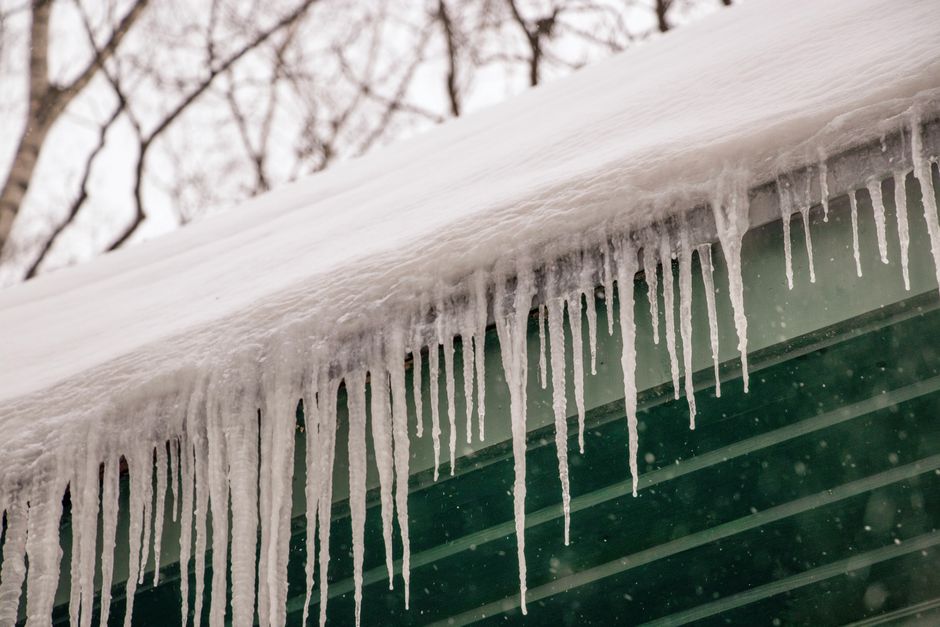
Winters in the Dubuque area and across the surrounding tri-state region put a specific kind of stress on gutters and roof edges that doesn't show up the rest of the year. Repeated freeze-thaw cycles, heavy snow load, and ice dams all interact with the roofline in ways that are worth understanding, separate from any question of storm response or repair services. This article is informational — it explains what happens physically at the roof edge during a Midwest winter, not how to respond to a specific incident of damage.
How ice dams form
An ice dam starts with heat escaping from the attic space and warming the roof deck near the ridge, even while the outside air stays well below freezing. That warmth melts the bottom layer of snow sitting on the upper roof. The meltwater runs down the roof slope until it reaches the eave — the section of roof that overhangs the exterior wall — which usually stays colder because it isn't sitting above heated living space. At that colder edge, the water refreezes.
Over the course of a cold snap, that refreezing builds up a ridge of ice right at the eave, exactly where the gutter is mounted. As more snow melts higher up the roof and runs down, it hits that ice ridge and has nowhere to go — it pools behind the dam instead of draining off the edge.
Why this puts stress on gutters specifically
Gutters sit right at the eave, which means they're directly in the path of both the ice dam itself and the water pooling behind it. A few things happen as a result:
- Weight. Ice is considerably heavier than the same volume of snow, and an ice dam sitting on and around a gutter adds substantial weight to a system that's mounted with brackets rated for water and normal snow load, not a solid ridge of ice.
- Water backing up under roofing material. Water pooling behind an ice dam doesn't always stay in the gutter or run off the roof — it can work backward under shingles at the eave, since it has time to sit and find gaps while the dam blocks its normal path off the roof.
- Gutters pulling away from the fascia. The combined weight of ice, trapped water, and any snow still sliding down from above can stress the brackets holding a gutter to the fascia board, sometimes enough to pull sections loose over the course of a winter.
Snow load beyond ice dams
Even without a full ice dam forming, heavy accumulated snow sitting in and around a gutter adds weight the system has to support for an extended period, especially during a stretch of cold weather when nothing is melting off. A gutter that's already showing wear — loose brackets, minor sagging, seams under stress — is more likely to be affected by that added winter weight than a gutter in solid working condition.
Freeze-thaw cycling over the course of a winter
The Dubuque area and Grant County, Wisconsin typically see repeated freeze-thaw cycles across a winter rather than one continuous freeze — a warm spell melts some snow and ice, then temperatures drop again and it refreezes. Each cycle repeats the same water-freezing-expanding pattern at the roof edge, which is part of why ice dam conditions can recur several times across a single winter rather than as a single isolated event.
Where heat cables fit into this picture
One approach used to manage ice dam formation at the roof edge is a heat cable system, which is designed to keep a defined channel at the eave and around gutters and downspouts warm enough that meltwater has somewhere to drain instead of refreezing into a dam. Heat cables don't change how much snow accumulates on the roof or eliminate the need for gutter maintenance — they address the specific mechanism of ice damming at the roof edge. More detail on how that works is covered on the heat cables and ice dam prevention page.
What this means for gutter condition going into winter
Because ice dams and snow load add weight and water exposure right at the point where gutters are mounted, a gutter system's condition heading into winter matters. Loose sections, minor sagging, or gutters already pulling away from the fascia are more likely to be made worse by a winter's worth of freeze-thaw cycling than a system that's securely attached and draining properly going into the cold season. This is one of the reasons gutter condition is worth checking in the fall, well before the first hard freeze, rather than after a winter has already put stress on the system — see seamless gutter installation for what a properly installed and secured system looks like.
Requesting a quote
If you're noticing ice buildup, sagging, or other signs of winter stress on your gutters, you can request a quote through this site to have the system looked at. Call 908-493-5028 or fill out the short form to get started.