Can Gutter Guards Help Prevent Ice Dams?
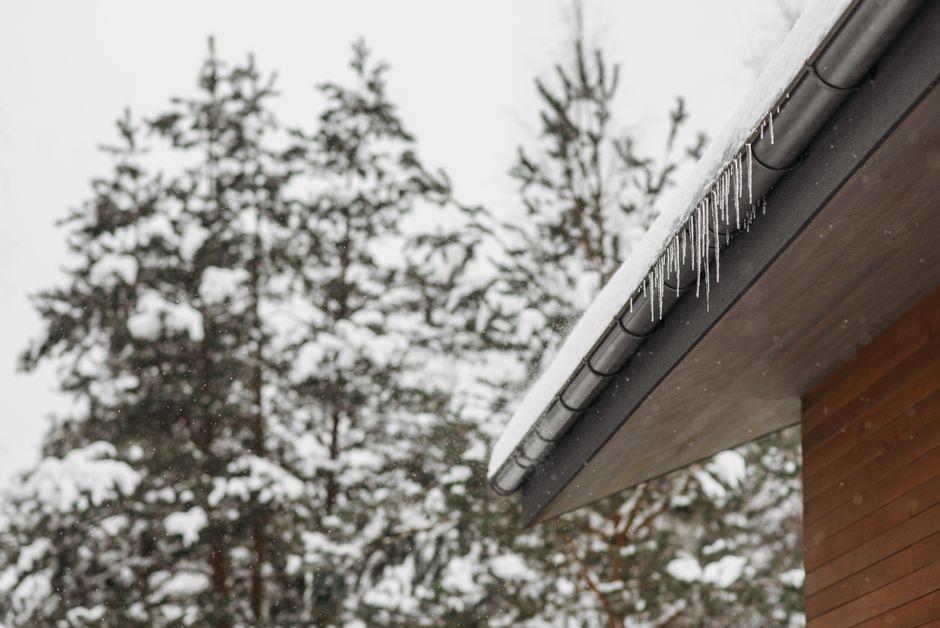
Understanding What Causes an Ice Dam First
An ice dam starts with uneven roof temperature: attic heat warms the upper roof deck enough to melt the snow sitting on it, that water trickles downhill toward the eave, and it turns back to ice once it hits the colder, unheated overhang near the gutter line. Once a ridge of ice builds up along that edge, additional meltwater backs up behind it instead of draining normally, which is what allows water to work its way under shingles and into the roof structure. This process is driven primarily by attic heat loss and roof temperature differences, not by the gutter system itself.
Because gutter guards sit at the gutter line rather than addressing attic heat or roof temperature, it's worth being clear from the start: guards do not prevent an ice dam from forming in the way that improved attic insulation or ventilation would.
Where Gutter Guards Do Play a Role
What gutter guards can influence is how a gutter behaves once meltwater and ice reach it. A gutter that's clear and unobstructed heading into winter has more usable capacity to move meltwater along the roof edge than one that's already partly blocked by leaves, debris, or standing water from the fall. Since guards reduce how much organic debris settles inside the trough over the year, a guarded gutter is less likely to already be clogged with decomposed leaves or built-up sediment by the time winter freeze-thaw cycles begin.
A gutter that's already restricted by debris gives meltwater fewer places to drain even before an ice dam starts backing water up, which can make the water backup at the roof edge worse than it would be with a clear gutter underneath. In that specific, secondary sense, keeping the gutter itself free of debris through the guard's normal function can reduce one contributing factor to how much water pools at the eave once conditions for an ice dam are already present.
What Gutter Guards Don't Change
Guards don't affect attic insulation, ventilation, or the roof temperature differences that actually drive ice dam formation. A well-insulated, well-ventilated attic keeps the whole roof surface closer to a uniform temperature, which is the primary factor in whether snow melts unevenly and refreezes at the eave in the first place. A guarded gutter on a poorly insulated attic will still see ice dams form above it, since the guard has no influence on the heat loss driving the process.
Guards also don't manage the weight of ice and snow that can build up along a roof edge and gutter line during a heavy winter. A gutter guard is not a structural or thermal solution to ice buildup — it's a debris-management feature that has a narrow, secondary relationship to how well the gutter underneath drains once meltwater does reach it.
Downspouts and Ice Dam Runoff
Once meltwater does make it past an ice dam and into a clear, well-functioning gutter, it still needs somewhere to go. A downspout that's clear and properly draining is what actually carries that water away from the foundation once it reaches the gutter system, so keeping downspouts clear is a natural companion consideration alongside guard performance at the trough. A gutter guard that's doing its job at the top of the system doesn't help much if the water it lets through has nowhere to drain once it reaches ground level, particularly during a rapid thaw when meltwater volume increases quickly.
Considering Additional Measures
Homeowners dealing with recurring ice dam issues sometimes look at ice dam prevention measures such as heat cable installation along vulnerable roof edges, which address the melting and refreezing pattern more directly than a gutter guard can. Attic insulation and ventilation improvements are typically the more direct long-term factor in reducing ice dam formation itself, since they address the underlying heat-loss cause rather than the water-management step further downstream.
Snow Load on Guards Themselves
Heavy, wet snow can sit on top of a gutter guard the same way it sits on a roof, and depending on the guard's design and how it's fastened, that added weight is something to be aware of over a full winter. This is a separate consideration from ice dam formation itself, but it's part of the same broader picture of how a gutter and guard system holds up through repeated snow and freeze-thaw cycles in a typical tri-state winter. A guard that's properly fitted and securely fastened to the gutter generally handles normal seasonal snow load without issue, which is one more reason installation quality matters as much as guard style when it comes to winter performance.
A Realistic View
Gutter guards are not an ice dam prevention measure on their own, and thinking of them that way sets up an unrealistic expectation for what they can do through a tri-state winter. What they do contribute is keeping the gutter system itself clear and functional heading into the freeze-thaw season, which is a useful but limited piece of a much larger picture that mostly comes down to attic heat, roof temperature, and — for homes with a recurring problem — measures aimed more directly at the roof edge itself.