Are Gutter Guards Worth It for Homes Surrounded by Trees?
Where Tree Cover Changes the Equation
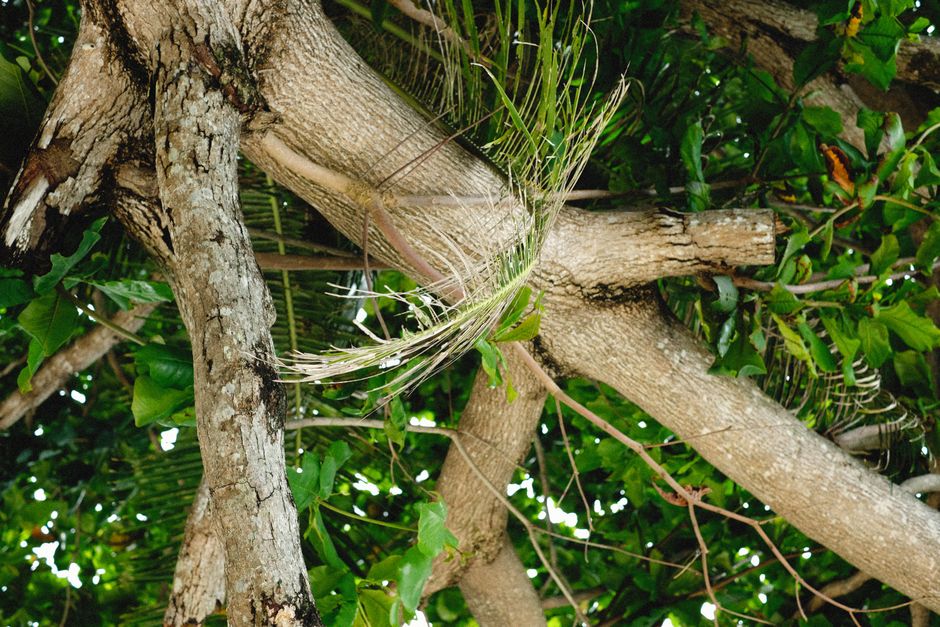
Tree cover is one of the biggest factors in how much value gutter guards add to a property. A home with little or no overhanging tree canopy has relatively little debris reaching its gutters in the first place, which limits how much a guard actually changes day to day. A home surrounded by mature trees — a common situation across the wooded parts of the tri-state area, from bluff-country lots along the Mississippi to established neighborhoods with decades-old shade trees — deals with a steady stream of leaves, seed pods, twigs, and in some cases needles throughout the growing season and into fall, which is exactly the kind of debris load guards are designed to manage.
Not All Trees Create the Same Kind of Debris
The type of tree matters as much as the amount of canopy. Broadleaf trees that drop large leaves in autumn — oaks, maples, and similar species common throughout the region — tend to shed debris that most guard styles handle well, since larger leaves are stopped at the surface or carried off by a reverse- curve design rather than settling into the trough. Evergreens that drop fine needles year-round present a different challenge, since needles can pass through wider mesh openings or accumulate steadily on a guard's surface in a way large leaves don't. A property with a mix of both is likely to see guards perform well against the leaf load but need more frequent surface attention because of the needles.
Seed Pods, Catkins, and Seasonal Debris
Beyond leaves and needles, many common shade trees produce seed pods, catkins, or helicopter-style seeds during specific seasons that can behave differently from either category. Some of this material is light enough to blow off a guard's surface on its own; some tends to stick, especially when wet, and can build up in the same way fine needles do. Homeowners with a specific problem tree nearby — one that consistently drops a heavy load of a particular type of debris — often get the clearest picture of how a guard will perform by watching how that debris behaves on the roof and in the gutter during a season before guards go in, since it points directly to which guard style will handle that specific debris best.
The Maintenance Trade-Off for Heavily Treed Properties
For a property with substantial tree cover, the practical case for guards usually comes down to frequency of upkeep rather than eliminating it. Without guards, a heavily treed lot often needs its gutters cleared multiple times through the fall alone, plus a check after any significant storm that brings down branches or a heavy leaf drop. With guards installed and matched reasonably well to the type of debris involved, that need typically drops to occasional surface clearing rather than repeated full cleanings — a meaningful difference for a property where tree debris is a near-constant presence rather than an occasional issue.
When Guards Matter Less
On the other end, a property with minimal tree cover — open lots, newer developments with young or sparse landscaping, or homes set back from mature trees — sees a much smaller practical benefit from guards, simply because there's less debris reaching the gutters in the first place. In that situation, the case for guards is weaker, since there's less of the underlying problem for a guard to solve.
Proximity and Overhang Matter, Not Just Tree Count
How close a tree sits to the roofline, and how directly it overhangs the gutter, often matters more than the total number of trees on a property. A single large tree with branches extending directly over a roof edge can deposit more debris into that section of gutter than several smaller trees set farther back from the house. Homes on wooded lots where mature trees grow close to the structure — common in some of the older, established neighborhoods and bluff-adjacent properties throughout the area — tend to see concentrated debris in specific sections of gutter directly beneath the overhang, rather than an even load across the whole roofline, which is worth factoring in when deciding whether guards make sense for the entire system or primarily for the sections under the heaviest canopy.
Matching the Decision to the Property
The clearest way to evaluate whether guards are worth it for a specific home is to look at what's actually falling into the gutters over a typical year — how much, what kind, and how often it needs to be cleared out without any guard in place. A heavily treed property dealing with frequent debris buildup is the situation where guards tend to make the most practical difference. A property with light tree exposure and infrequent buildup has less to gain, since there's simply less debris load for a guard to manage in the first place. Comparing notes with a neighbor on a similar lot, if one's available, can also be a useful reality check — two homes on the same street can have very different debris loads depending on which specific trees sit closest to each roofline, so a single property's own history is usually a better guide than a general rule about the neighborhood as a whole.